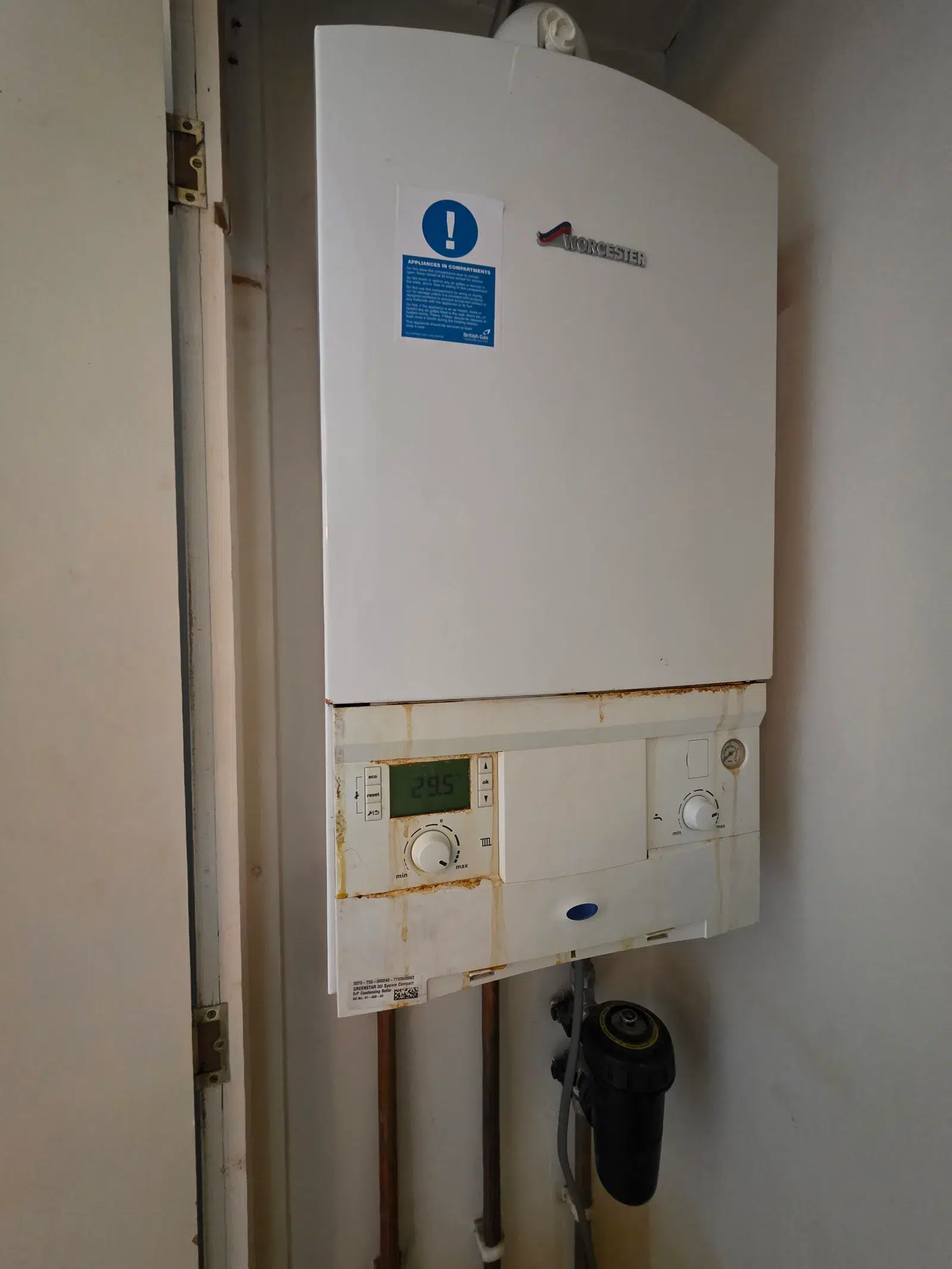
Every job in Clapham, SW4 starts with a knock on the door, but this one told its own story before we’d even opened the front panel. The Worcester Bosch on the wall had been leaking for a while — rust streaks running down the casing, staining the wall beneath it. Once we got it open, it was clear this wasn’t a boiler we could patch up and walk away from. It was time to let it go.
Why This Worcester Bosch Was Beyond Saving
We always look for a repair before we recommend a replacement — it’s the first thing we check on every callout. But some faults go past the point of a sensible fix, and this was one of them. The staining on the outer casing was the first clue: water had been tracking down from inside the appliance for some time.
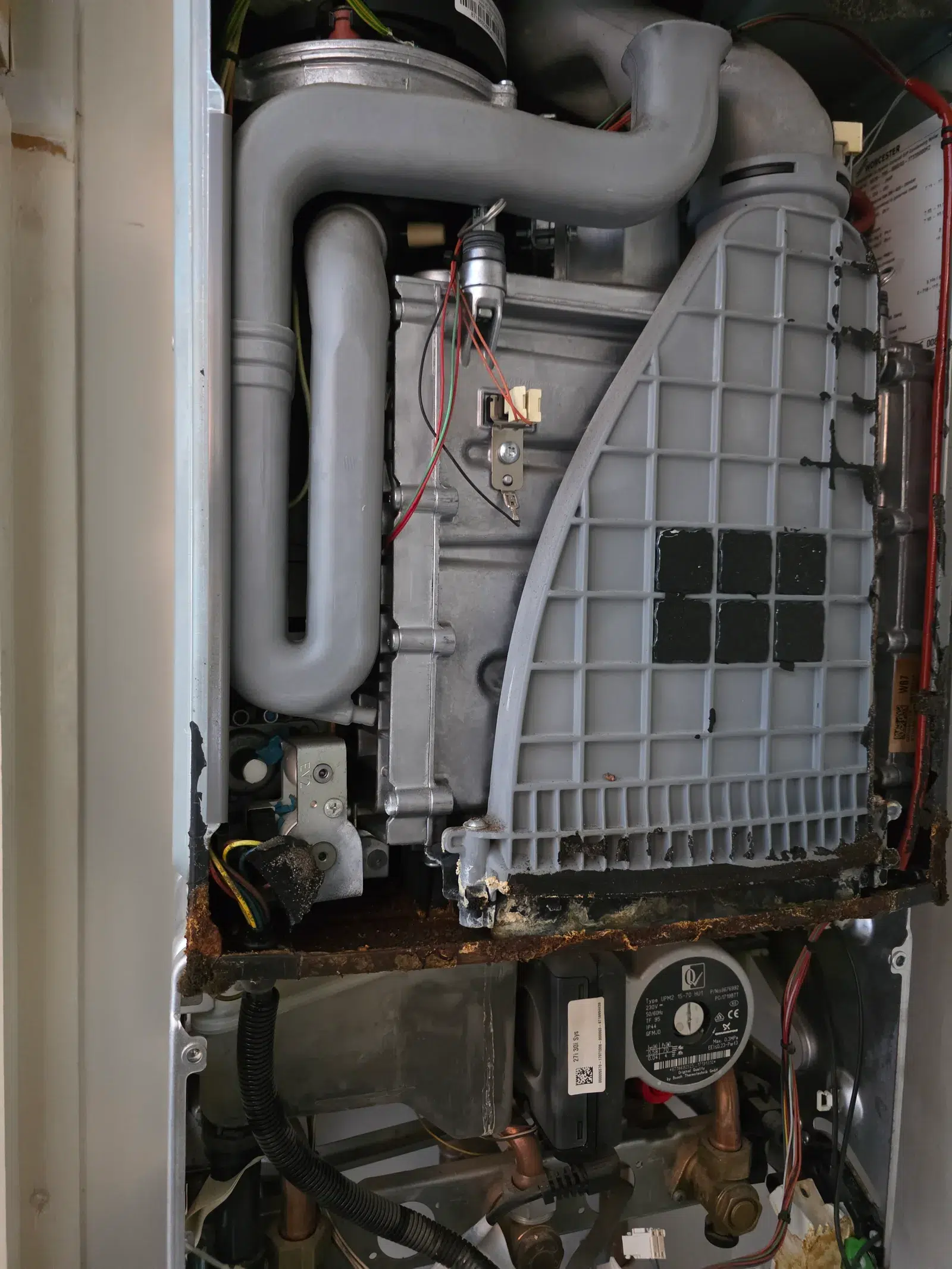
Once we stripped the casing off, the extent of it was obvious. The base of the chassis and the bottom of the heat exchanger assembly were heavily corroded — not surface rust, but structural corrosion that had been eating into the metalwork for years.
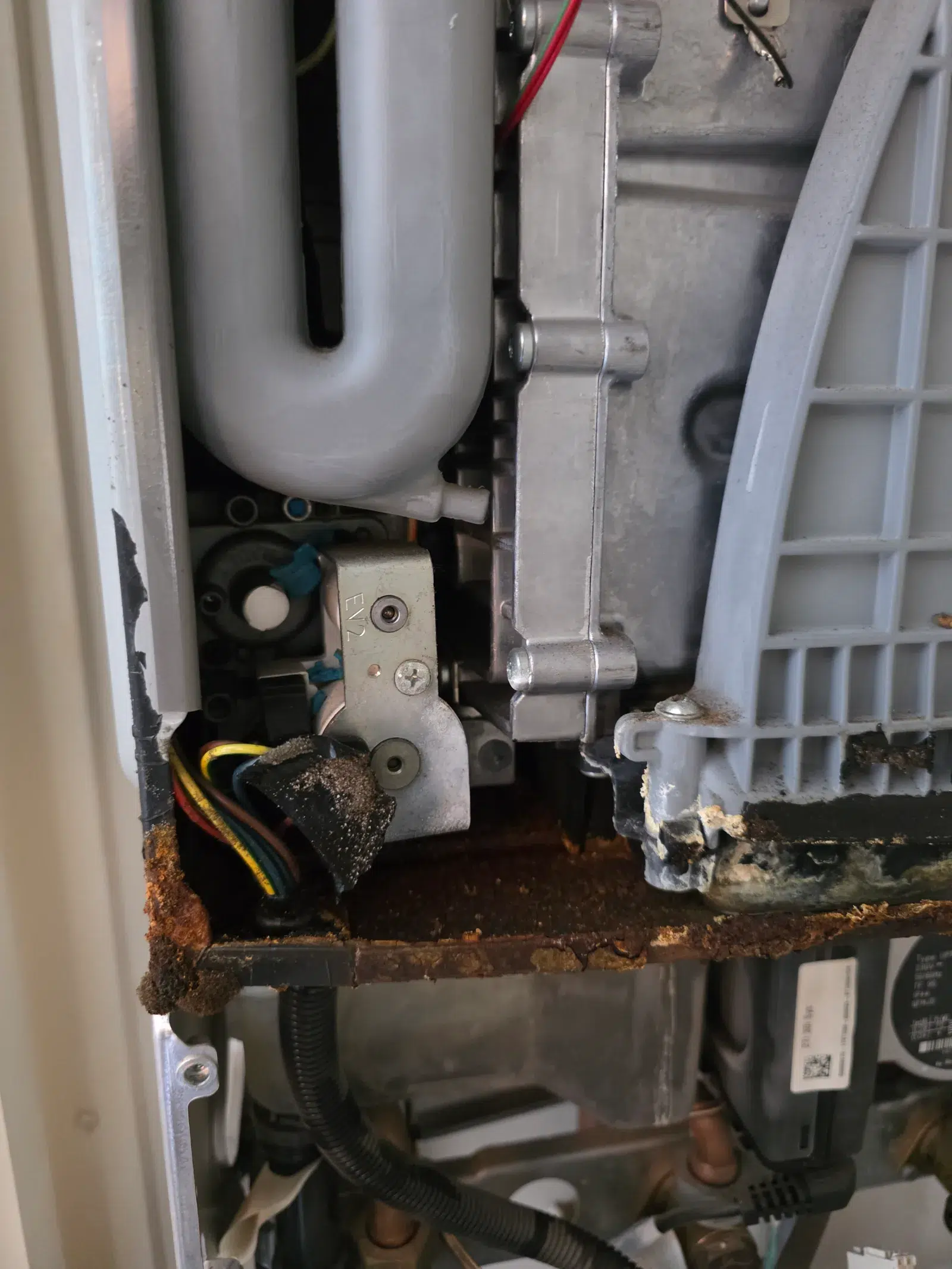
Up close, it was worse still — the wiring and mounting points at the base of the unit were sitting in corrosion that had compromised the frame itself. Replacing a part here or there wasn’t going to fix this. When the chassis and heat exchanger are corroded to this degree, no amount of servicing brings a boiler back safely. This one had to be replaced.
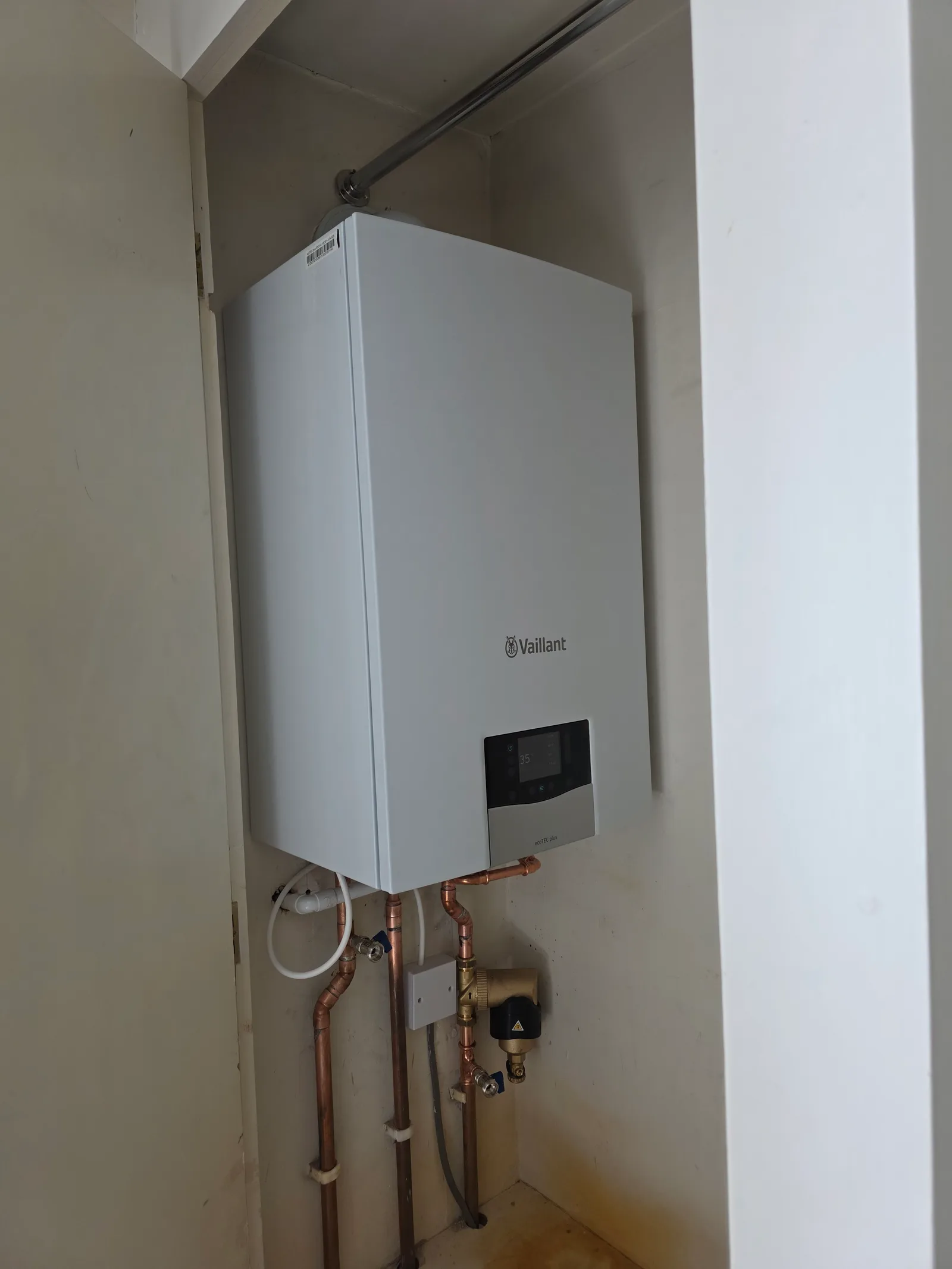
The Replacement: A Vaillant ecoTEC plus 630
For the new installation, we specified a Vaillant ecoTEC plus 630 — a reliable choice that comes with a 10-year manufacturer warranty when installed and registered by a Gas Safe engineer like us. It was sized to suit the property’s heating and hot water demand, and installed cleanly in the same location as the old unit.
Getting the Sizing Right: A New Expansion Vessel
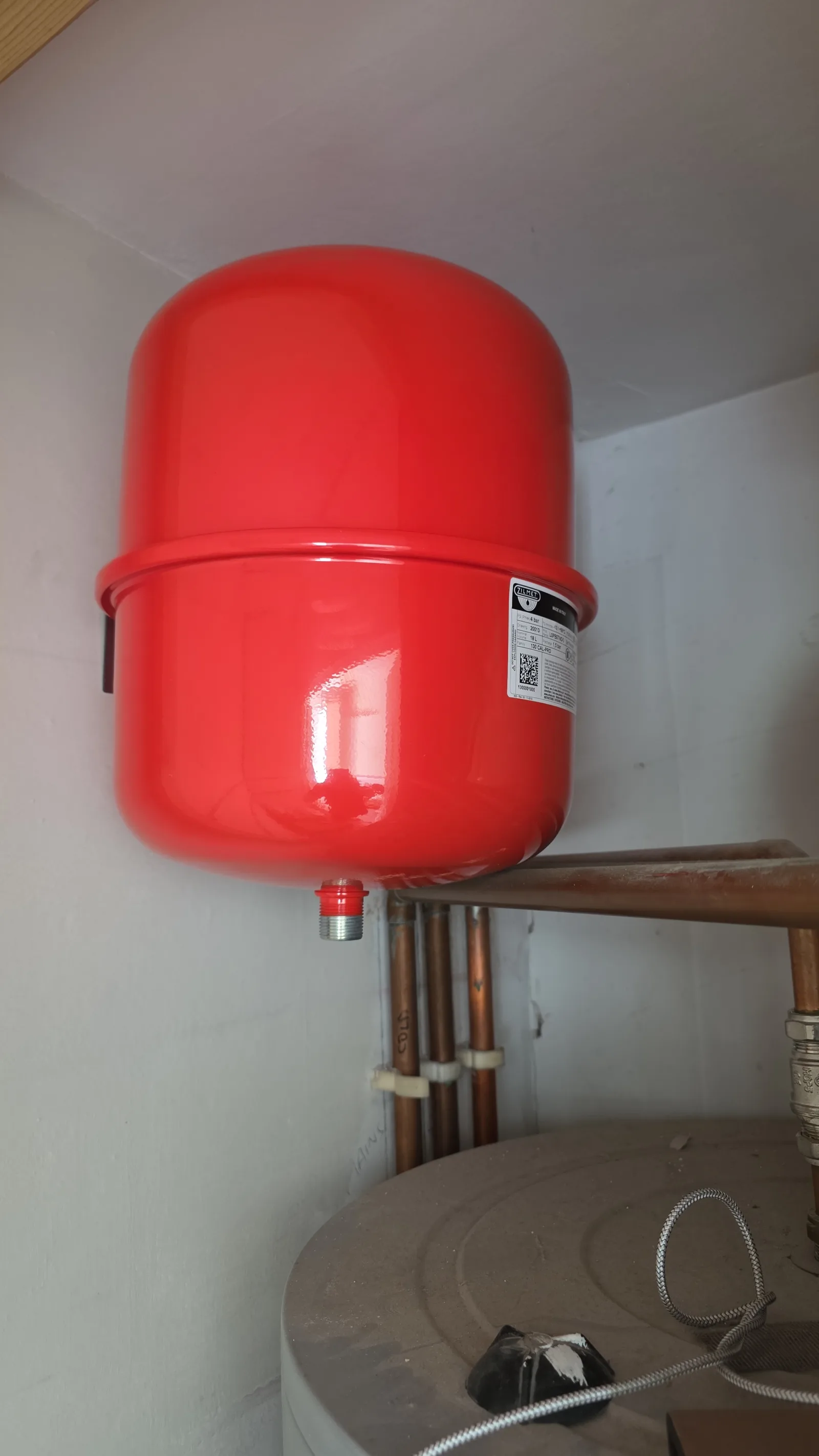
A new boiler isn’t just a straight swap — it’s a chance to check the rest of the system is actually fit for purpose. As part of the installation, we calculated the system’s total water content to check the expansion vessel was correctly sized for the property. It wasn’t — so we fitted a new, correctly sized expansion vessel to properly absorb the water’s expansion as it heats up, rather than leaving the system to rely on the pressure relief valve to take the strain.
Standard Practice: Full System Power Flush
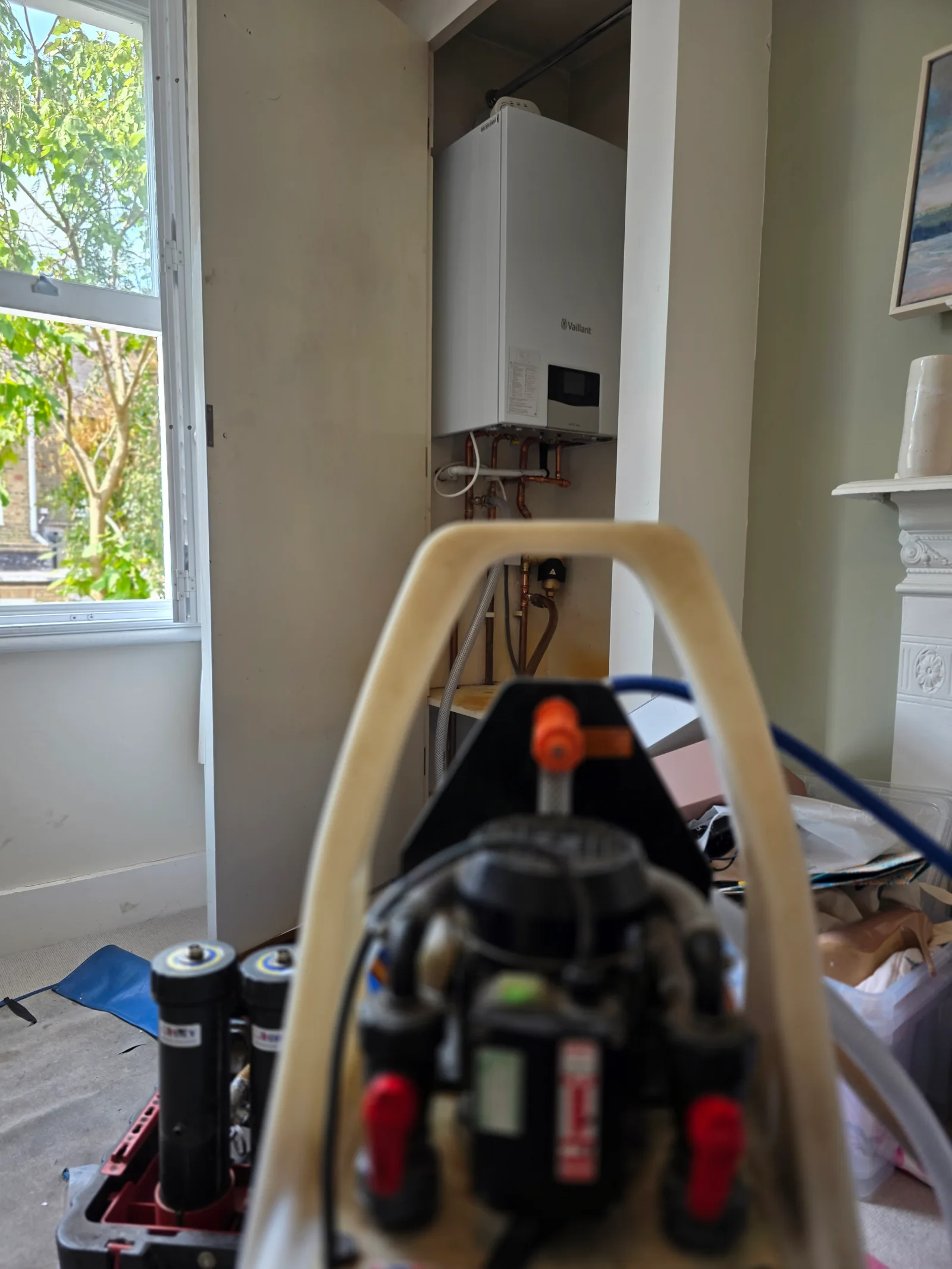
As with every new boiler installation, we don’t connect a brand-new appliance to old, dirty pipework and hope for the best. The old Worcester Bosch’s corrosion was a sign of a system that hadn’t been treated well over the years, so once the Vaillant was in place, we carried out a full power flush of the central heating system to clear out years of accumulated sludge and debris before it had the chance to reach the new heat exchanger.
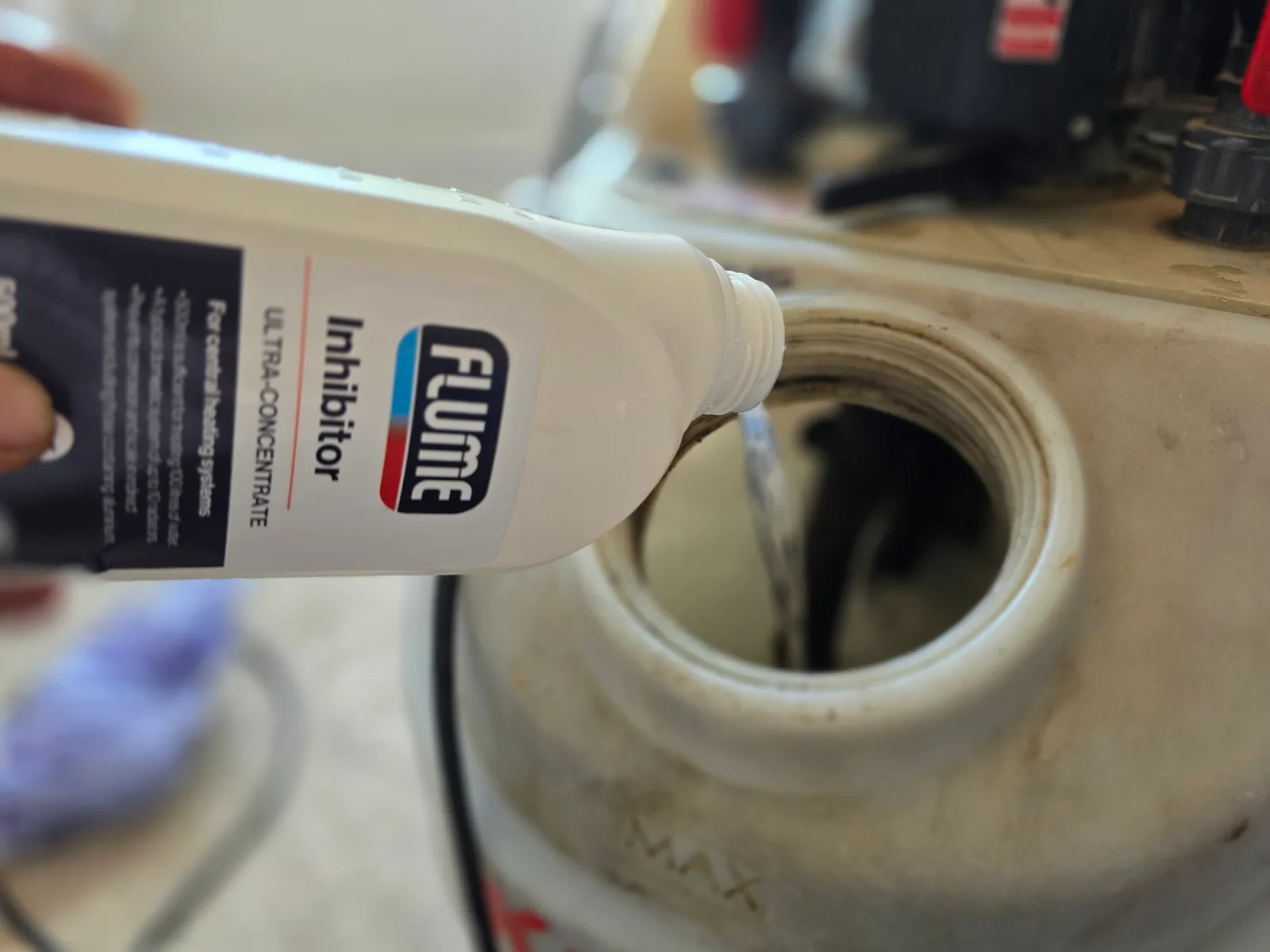
With the system flushed and refilled, we dosed it with a fresh dose of central heating inhibitor to protect the new boiler and pipework from future corrosion — the exact problem that condemned the old Worcester Bosch in the first place.
The Result
What started as a leaking, corroded boiler that had no safe way back is now a fully compliant Vaillant ecoTEC plus 630, backed by a correctly sized expansion vessel and a freshly flushed, inhibitor-protected system. It’s the difference between patching over a problem and actually fixing it — and it’s why we check the whole system, not just the appliance on the wall, every time we install a new boiler.