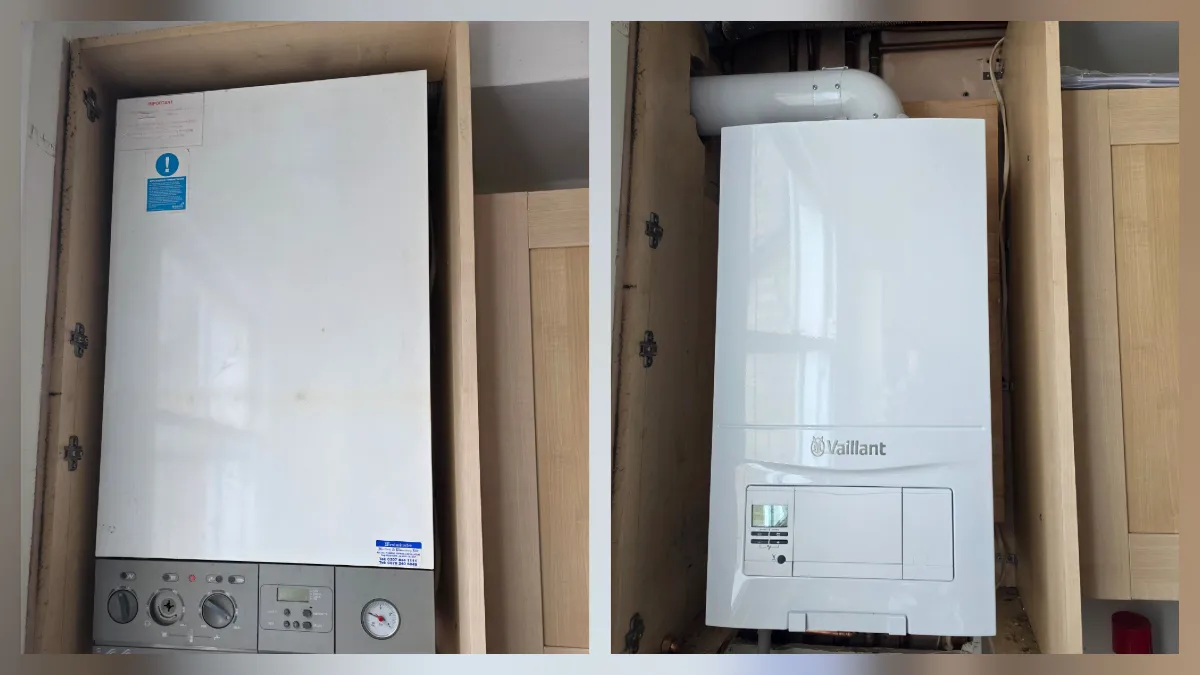
I just finished a job that serves as a perfect reminder of why “old and reliable” can quickly become “old and expensive.” We removed a 25-year-old non-condensing boiler that had finally reached the end of its life.
The 25-Year Milestone
A boiler reaching a quarter-century of service is impressive, but technology has moved on significantly in those 25 years. While many of these older, heavyweight units were built to last, they face two major problems today: efficiency and parts.
Why “Non-Condensing” is Costing You Money
If your property is still running a non-condensing unit (whether it’s a Worcester Bosch, Ideal, or Baxi), you are likely losing a huge percentage of heat straight out of the flue. Modern condensing boilers are designed to capture that heat, making them significantly cheaper to run.
For landlords, an old unit like this is often the main reason for a poor EPC rating.
The “Obsolete” Repair Trap
In this recent case, the boiler finally broke down, and because of its age, the required parts were obsolete.
- The Result: The tenants were left without heating and hot water for several days.
- The Lesson: When parts are no longer manufactured, you can’t “just fix it.” You are forced into an emergency replacement on the worst possible day.
The Upgrade: Compact & Efficient
We replaced this veteran unit with a Vaillant ecoFit Pure. It was the perfect solution because:
- Cupboard Fit: It’s a compact boiler designed specifically to fit into tight spaces where old units used to sit.
- Modern Reliability: With a brand-new warranty and high-efficiency performance, the landlord can rest easy knowing the property is covered.
Homeowners & Landlords: If your boiler is over 15–20 years old, don’t wait for a total breakdown. A planned upgrade is faster, less stressful, and far better for your bank balance in the long run.