IMPORTANT SAFETY & LEGAL NOTICE: This guide is intended as a technical reference for Gas Safe Registered engineers. Under the Gas Safety (Installation and Use) Regulations, it is illegal and extremely dangerous for anyone not on the Gas Safe Register to repair or even open a gas boiler. If you are a homeowner, please do not attempt any of these checks yourself—book a qualified professional.
The EA Fault Code on a Worcester Bosch Greenstar CDi Combi is essentially the boiler saying “I tried to light, but I don’t see a flame.” It’s the most common lockout on these units. My philosophy at MAK Plumbing is: Test, Don’t Guess.
Whenever I’m called out to an EA lockout—like a job I had recently in Putney (SW15)—the first thing I do is determine which category the fault falls into:
- The Immediate Failure (Hard Lockout): The boiler fails to ignite every single time you reset it. The sequence of operation is broken somewhere.
- The Intermittent Failure: The boiler works fine for a few hours or days, then randomly locks out. These are the tricky cases where something is “unstable” rather than totally dead.
Part 1: The Immediate Failure (Hard Lockout)
When the boiler fails to ignite every single time you reset it, the sequence of operation is broken. In these cases, the fault is usually a “hard” mechanical or electrical failure that prevents the flame from ever establishing.
1. The Audible Check and Initial Observations
Upon arrival, turn the boiler on and watch the display. Don’t touch anything yet—just listen to the machine.
- Listen for “Kettling” or Gurgling: If you hear boiling or gurgling, check the Condensate Trap. If it hasn’t been serviced, debris can cause condensate to back up into the heat exchanger and “drown” the flame. Also, check for frozen or blocked external condensate pipes.
- The Fan Start-up: As soon as you reset, the fan is the first move. If it’s dead silent, you’ve found your starting point.
2. Diagnostic Logic for a Non-Starting Fan
If the fan isn’t starting, you need to prove whether it’s a lack of power or a dead motor:
- Check Voltage at the Fan: Test for power across the Purple and Brown cables at the fan harness. You are looking for 230V–240V AC.
- Power Present: If you have 230V but no spin, the fan is faulty.
- No Power: Check the power directly off the PCB board. If the board is sending 230V but it isn’t reaching the fan, check the harness for continuity. If the board isn’t outputting voltage at all, the PCB is faulty.
Engineer’s Field Tip: If the fan has 230V but seems dead, try using a hairdryer to gently heat the small PCB mounted on the fan. Sometimes this “wakes up” a failing component and can provide temporary heating for the resident until you return with a new fan.
3. Proving the Gas Supply & Gas Valve
If the fan is running correctly, we move to fuel delivery:
- Gas Presence: Connect your manometer to the inlet test point on the gas valve. You need a minimum of 18 to 21 mbar of static pressure.
- The Pressure Drop Test: Watch the manometer during the ignition attempt. Does the pressure drop when the valve clicks?
- If NO drop: Test for voltage at the gas valve solenoids. If power is present but there is no drop, the gas valve is faulty (mechanically seized).
Engineer’s Field Tip: Try tapping the side of the valve body gently or removing the valve and giving it a shake to clear debris. If a light tap makes it click and fire, you’ve proven the valve is sticking.
4. The Spark, The Mix & The Short Burn
If air and gas are proven, we check the final ignition components:
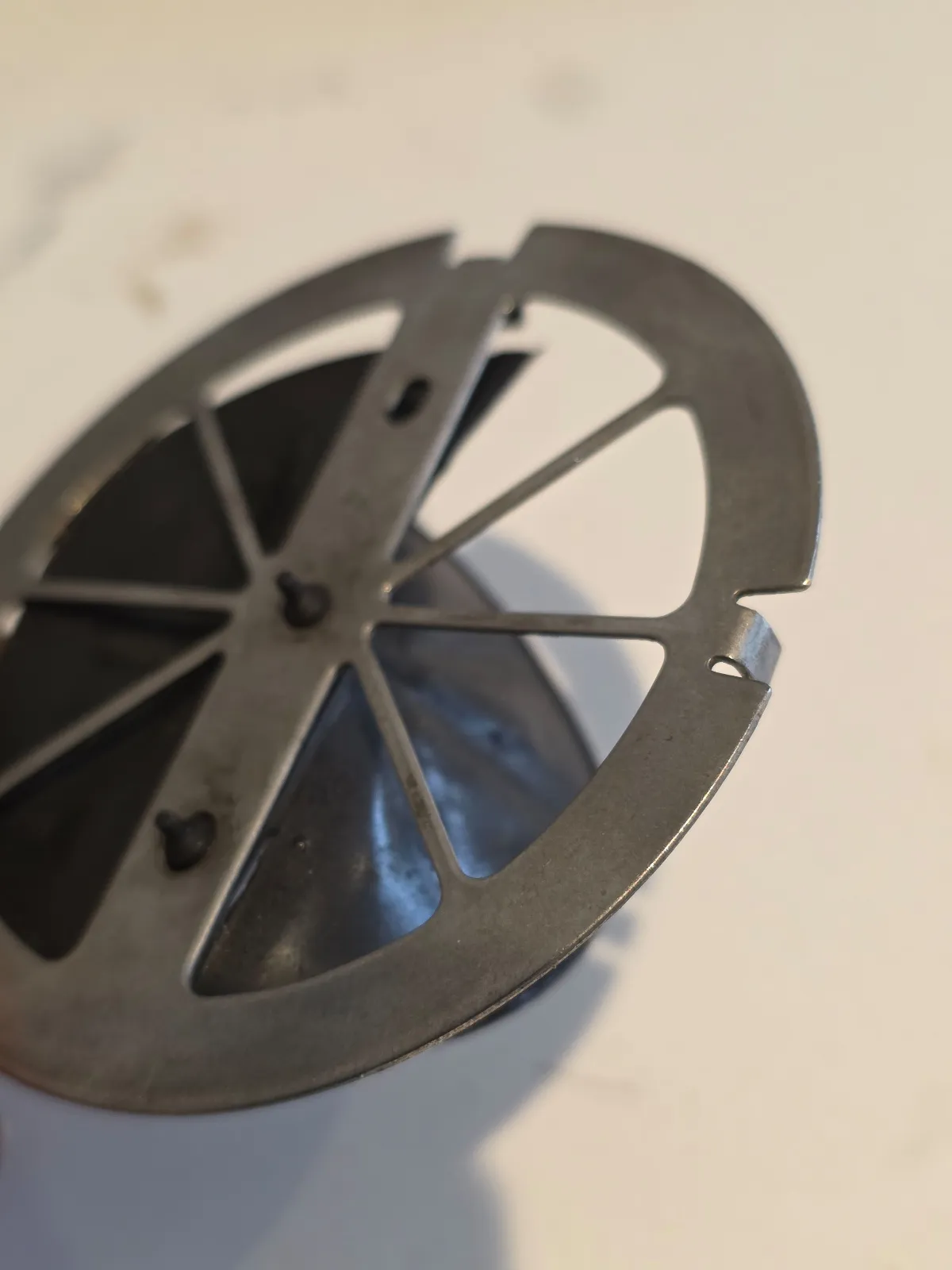
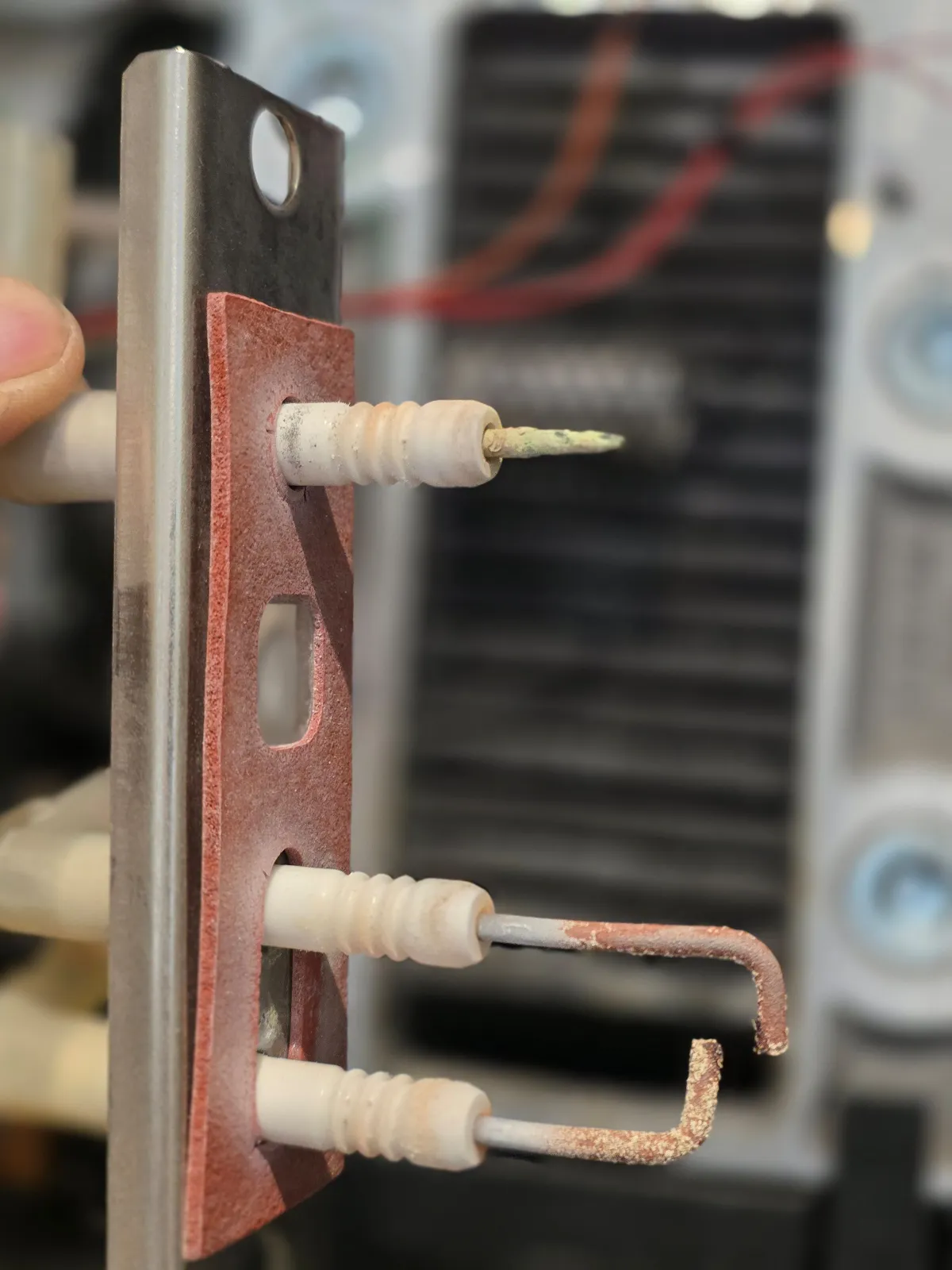
- Ignition Electrodes & Bearing Plate: Pull the electrodes and check for oxidation or cracked ceramics. Check the rubber Bearing Plate flap; if it is sticky, the air-to-gas ratio will be off.
Engineer’s Field Tip: If the plate is only lightly sticking, rubbing graphite from a pencil onto the frame acts as a dry lubricant to prevent it from getting stuck again.
The “30-Second Burn”: If you see the green flame light and the boiler ignites but dies after ~30 seconds, it isn’t “seeing” the flame. Check the rectification lead for continuity back to the PCB and inspect the heat exchanger for fouling that could be destabilizing the flame signal.
Part 2: The Intermittent Failure (Unstable Fault Finding)
When a boiler starts but locks out randomly, we aren’t looking for a “dead” part; we are looking for instability. This logic is what I used to solve a particularly stubborn EA fault in Clapham recently.
1. Visual Forensics & Maintenance State
Before touching a tool, look at the internal condition. A boiler’s cleanliness is a diagnostic data point. If the unit shows signs of neglect, a standard reset won’t work. Often, a full strip-down service—deep-cleaning the heat exchanger cells and the sump/trap—is the actual “repair” for an intermittent EA. While you’re in there, inspect the seals for white “crusting”; any sign of combustion leakage inside the room-sealed casing will cause the boiler to suffocate on its own exhaust, leading to a flame dropout.
2. Comprehensive Gas Supply & Stability Analysis
We know the gas valve opens, but for intermittent faults, we must prove the volume and consistency of the fuel:
- The “Whole House” Load Test: Check the working pressure at the gas valve while the boiler is at max output. A reading of 13 mbar might keep the boiler running alone, but if the client turns on a 14kW cooker, the pressure can plummet. That sudden drop starves the flame and triggers the lockout.
- The Governor Check: Monitor the manometer for several minutes. If the pressure is “hunting” or bouncing (for example, swinging between 9 mbar and 27 mbar), the meter governor is failing. This fluctuation makes it impossible for the gas valve to maintain a steady mix.
3. Audible Cues & The Bearing Plate
Listen closely during the burn cycle. Any humming or vibrating noise is a red flag. This usually indicates a Bearing Plate that is partially sticking or starting to tear. Because it’s not fully seized, it might only fail when the fan modulates, disrupting the air/gas ratio just enough to kill the flame signal.
4. Technical Calibration & Fan Pressure
- Negative Fan Pressure: This is the ultimate health check. By measuring the suction at the venturi, you can prove if the heat exchanger is “choked.” If the negative pressure is low, the boiler physically cannot pull in enough air, and a full strip-down is mandatory.
- Combustion Calibration: Test CO₂ at both Maximum and Minimum settings. If the readings are drifting out of tolerance, recalibrate the gas valve strictly to Worcester Bosch guidance to ensure the flame remains stable throughout the entire modulation range.
5. Flue, Drainage, and Sensing Components
- Flue Integrity: On longer runs, perished seals cause recirculation. Perform an integrity test to ensure the boiler isn’t “breathing” its own exhaust. Also, check the intake for minor obstructions like spider webs which can cause havoc during low-fire modulation.
- The Slow-Drain Trap: A partially blocked condensate pipe—very common at the kitchen sink waste spigot—causes water to back up slowly. The boiler runs until the water “drowns” the flame, then mysteriously works again once the water has slowly seeped away.
- The “Pointy” Probe: Inspect the rectification electrode. If it’s thinned out and pointy, it loses its ability to sense the flame accurately as the metal expands or the boiler modulates down.
The Final Diagnosis: Mechanical vs. Electronic Drift
If you have systematically proven that the gas stability, fan pressure, flue health, and drainage are all 100% healthy, you are left with the parts that can fail intermittently without leaving a clear trail:
- The Sticking Gas Valve: A gas valve can be on its way out, opening perfectly dozens of times but sticking mechanically on the next.
- The PCB Heat-Soak: A board can develop a hairline crack or a component failure that only acts up once the boiler has reached a certain temperature.
Engineer’s Note: In these scenarios, even Worcester Bosch technical support will tell you that a new PCB or Gas Valve is a possibility, but never a 100% certainty. For intermittent faults, we diagnose by exclusion. Once the mechanical environment is proven perfect, the electronic controls are the only variables left.